Grey Bruce: Poverty Outside the City

In December 2012, TVO participated in an international, cross-media series called “Why Poverty?” that tried to ask why, in the 21st century, poverty remains such a problem all around the world.

One of the spots is entitled “Grey Bruce: Poverty Outside the City.”  The Agenda spoke to three people, two involved in charities -the United Way of Grey Bruce  and the Adult Learning Centre –  one person who has struggled on low income, about the challenges faced by the less fortunate in Grey and Bruce counties.

http://theagenda.tvo.org/blog/agenda-blogs/grey-bruce-poverty-outside-city

While the spot is specifically focused on Grey and Bruce counties, it serves as a window to the kinds of particular circumstances both those in need and the charities that try to help them encounter in a large, far-flung rural community.

The video was a new experience for The Agenda, since they conducted all the interviews via webcam and used still digital images to complement the interview clips. While The Agenda team acknowledged the video quality was not the best, they felt it was a way to profile people that they might not have otherwise been able to showcase given time and budget constraints.

If you’re interested, you can watch and read all The Agenda’s “Why Poverty?” content in one spot.

Canada Falling Behind on poverty, inequalilty

Canada isn’t living up to its potential or its reputation when it comes to societal issues like poverty, government and inequality, according to the Conference Board of Canada.

The group gave Canada a ‘B’, good for a 7th place ranking out of 17 developed countries, but it said the “middle-of-the-pack” ranking leaves room for improvement.

Getting an ‘A’ at the top of the rankings were the Scandinavian nations (Denmark, Norway, Sweden and Finland) as well as the Netherlands and Austria. At the bottom were Japan and the U.S., both getting a ‘D’ ranking.

Income inequality the biggest challenge

Inequality was a major factor in Canada’s low ranking, according to the report. Canada ranked a ‘C’ on both income inequality and the gender income gap.

Many studies have pointed to the rise of income inequality in Canada over the past 30 years. The top 10 per cent have seen their average income rise 34 per cent, while the bottom 10 per cent have seen their earnings rise just 11 per cent. The report says income inequality is cause for concern, especially in education.

“Better education is a powerful way to achieve growth that benefits all,” writes Brenda Lafleur, the report’s author. But if the cost of education in Canada continues to rise, “it is very hard for the child of poor parents to do well.”

However, Canada still maintains a great level of income mobility, ranking ‘A’. Compared to other countries, there isn’t a very strong relationship between a family’s economic background and how much their children can expect to earn.

In Canada, just 19 per cent of a family’s disadvantage is passed on, while that is 47 per cent in the U.S. and 50 per cent in the U.K.

High poverty rates

Linked to inequality is Canada’s high poverty rate, which ranks among the worst of the 17 countries the report looks at.

Canada’s child poverty rate is 15.1 per cent, up from 12.8 per cent in the mid-1990s, earning a ‘C’ ranking – only the U.S. ranked lower. Working-age poverty was 11.1 per cent, up from 9.4 per cent in the late 1990s – the ‘D’ ranking Canada received was the same as the U.S. and Japan.

The Conference Board calls Canada’s rate of child poverty “unacceptable,” and says action needs to be taken.

“Poor children do not eat well, do not learn well and have low chances of escaping poverty when they grow up,” Lafleur said.

The role of government

In reducing inequality and poverty, the report finds that the Canadian government has proven quite effective.

The study notes that due to the tax system and transfers to the poor, income inequality is 27 per cent lower than it otherwise would be, and without government benefits and taxes, poverty rates would be 23 per cent, compared to the current 12 per cent.

However, the political system didn’t get a free pass. Voter turnout and confidence in Parliament were both rated ‘C’.

No ‘kinder, gentler nation’

Lafleur calls the report “myth-busting” of the idea of Canada as a “kinder, gentler nation,” saying that self-image is “based largely on a narrow Canada-U.S. comparison,” and that the U.S. ranked dead last among the 17 countries ranked.

The report wasn’t without a few positive marks for Canada – the conference board highlighted acceptance of diversity and life satisfaction as strengths.

Crime was also an area in which Canada was given good marks, with lower rates of homicides and burglaries than most of the other 17 countries.

Summary report at: Conference Bd of Canada Report FEB

That first meeting

Poverty Stakeholders Meeting

July 31, 2012  3:00 p.m. – 5:00 p.m.

Lee Manor Auditorium

Session Guidelines

R.E.S.P.E.C.T.

Honesty

Listen for the nugget of truth

Look for possibility

It’s okay to disagree

One person at a time

Speak from an authentic place

“What would it take for us to create a sustainable network of supports within our community?”

Communication among groups

Educating each other and Awareness:

  • accurate information from the right source
  • at the front line
  • Respect/equality

Shared value – What does it mean to help?  Shared assumptions/philosophy?

Integration vs segregation/separation

Real partnership

Integrated neighbourhoods

Leverage expertise

TRUST – two worlds:  faith & social services

Focus on shared vision

“Keep the main thing the main thing”   . Clients’ best interest

Shared language – common language

Choice/ownership/participation

Right people at the table (mental health)

Interagency groups

Faith and Social Services need to unite – joint vision, core values for whole community; know one another – reach out

Recognize limitation   where collaboration and awareness ????

Learn from our past successes

Community-based, relationships-based, scaled appropriately

Can we agree on what we agree on?

What is the shared vision?

Draft vision statements from break-out groups:

  1. To engage the community through people enabling people by providing resources and services to ‘alleviate’ poverty.
  2. A network that respectfully supports the community’s right to facilitate self-determination through acceptance and support.
  3. Having a shared interest and united front toward a common goal.
  4. To establish a connected community group/service to include those living in poverty – working to improve lives within the community, while ensuring the services are accessible, affordable, humanitarian, equitable, and provides choice.
  5. People-centred respect which happens through communication, filling the gaps and broadening the service base.

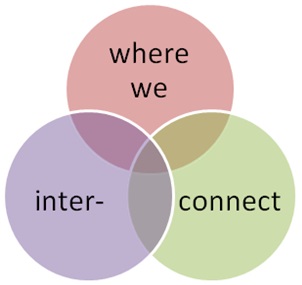
where we interconnect